The garden of Neuquén
Huinganco
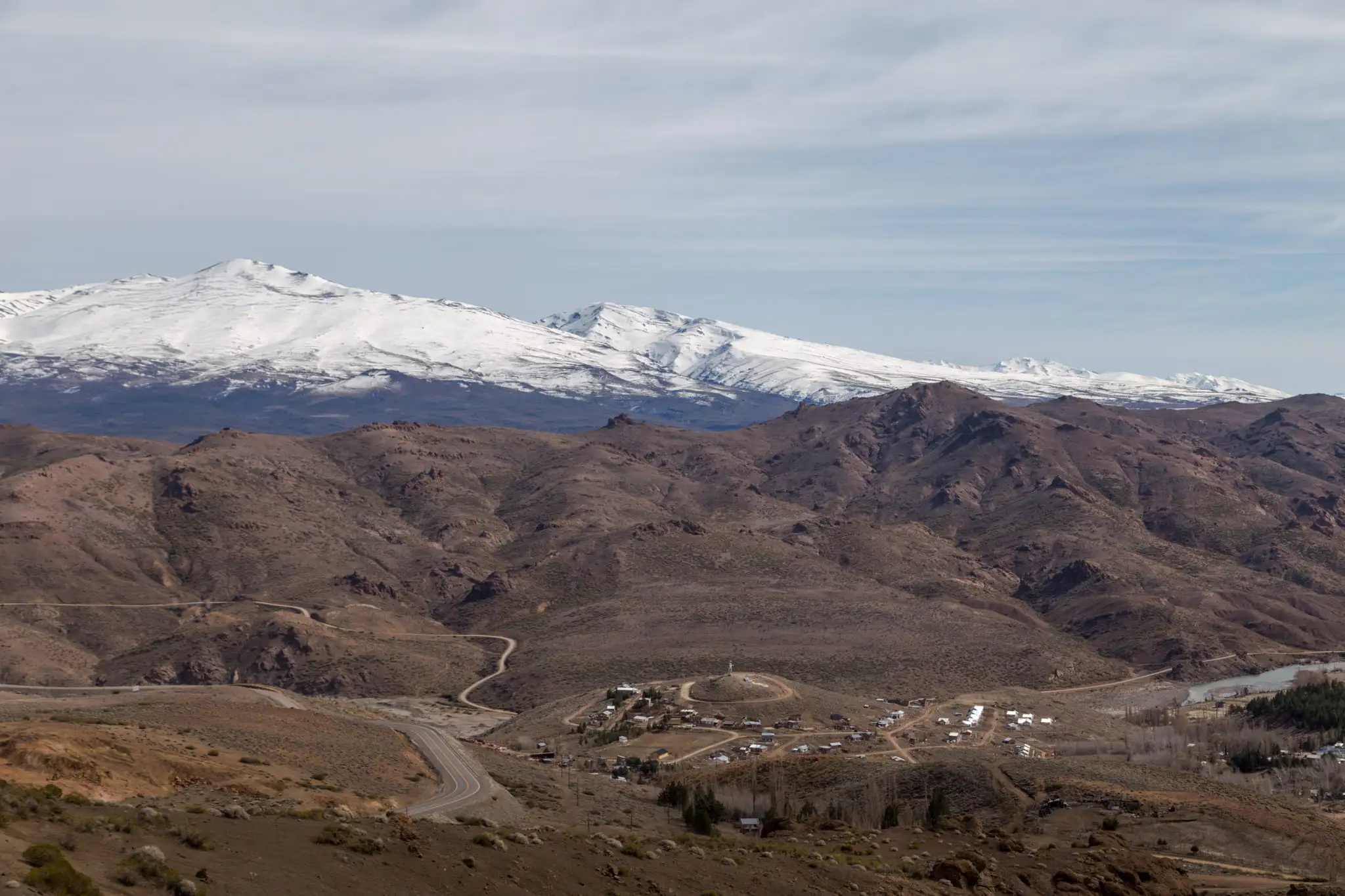
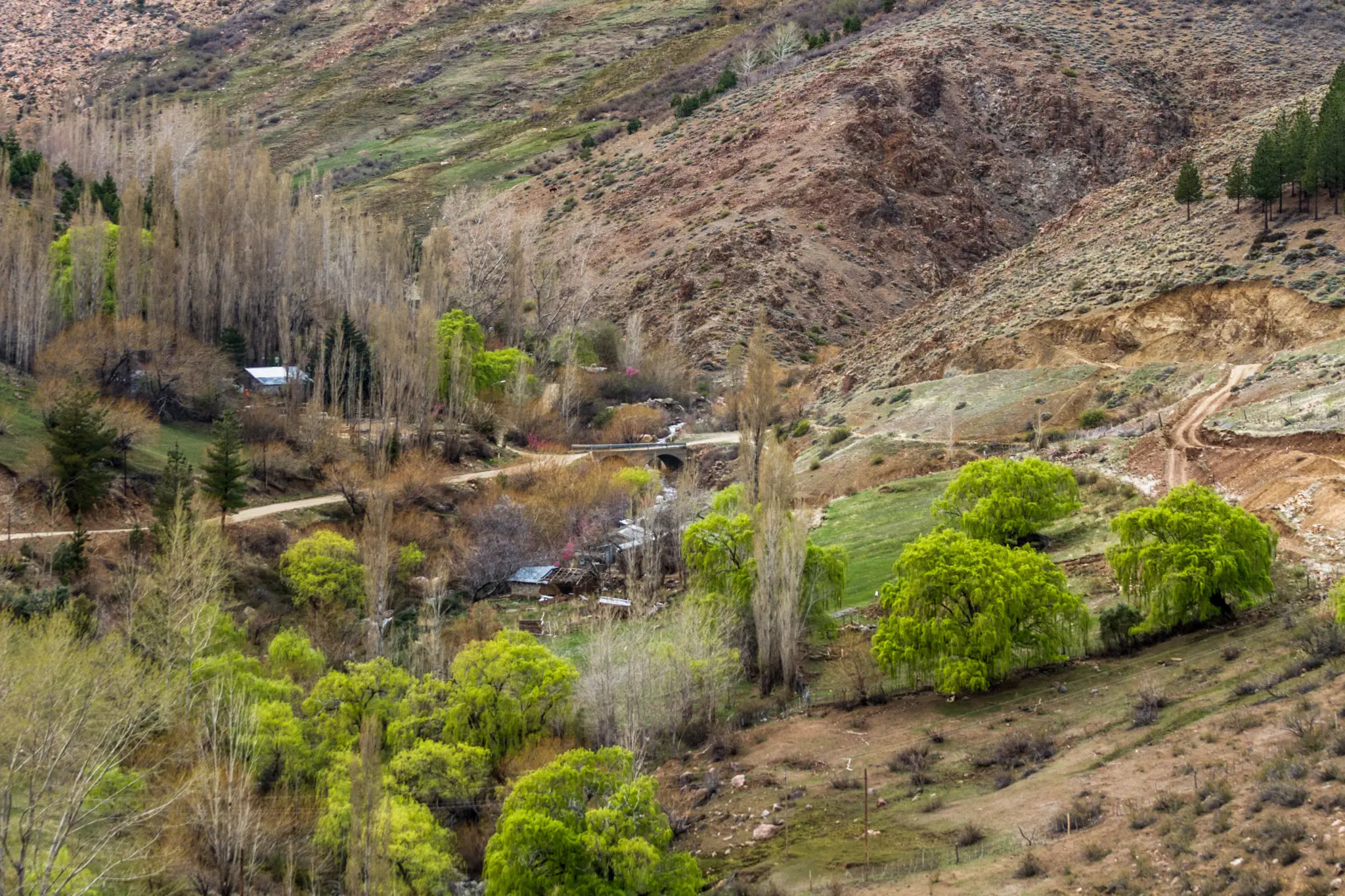
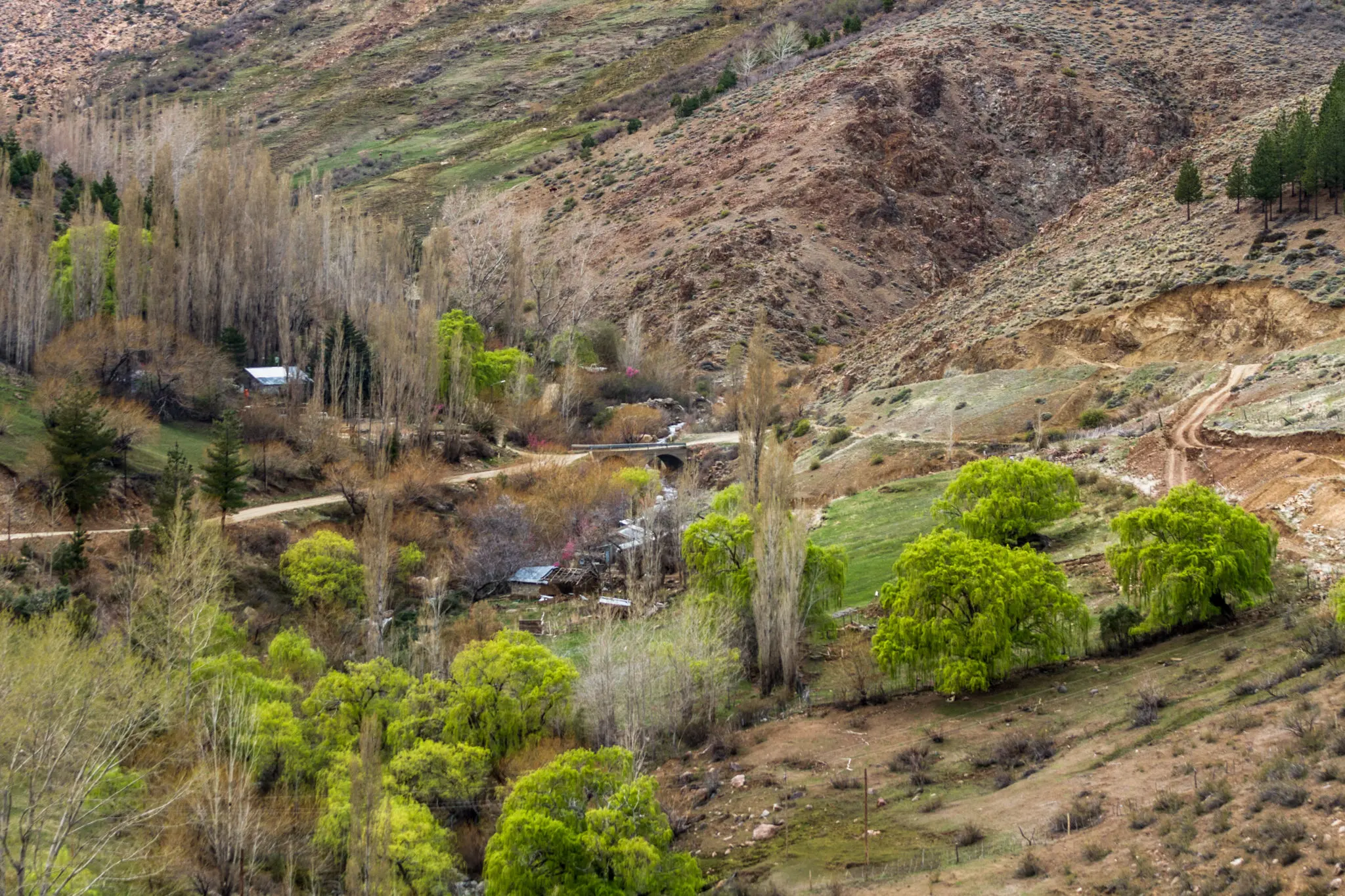
It is a small mountain town, 456 km from the city of Neuquén, 54 km from Chos Malal and 6 km from Andacollo. The road is paved except for the last 6 km, which are well-maintained compacted gravel.
The Pehuenche were the first inhabitants of these lands, using them for livestock and various crops that are still grown today. Later, in the early 1900s, the Andacollo gold rush established it as the town you can visit today.
Tourism keeps growing year after year, driven in part by the many popular festivals in Huinganco and the surrounding area — such as the Fiesta del Mote — and by sporting events that have gained international standing, like the Trail del Viento, held in Andacollo, which this year drew more than 700 national and international participants. We also highlight the growing importance of the Fiesta del Chivito, held in Chos Malal, whose reach extends well beyond Huinganco itself.
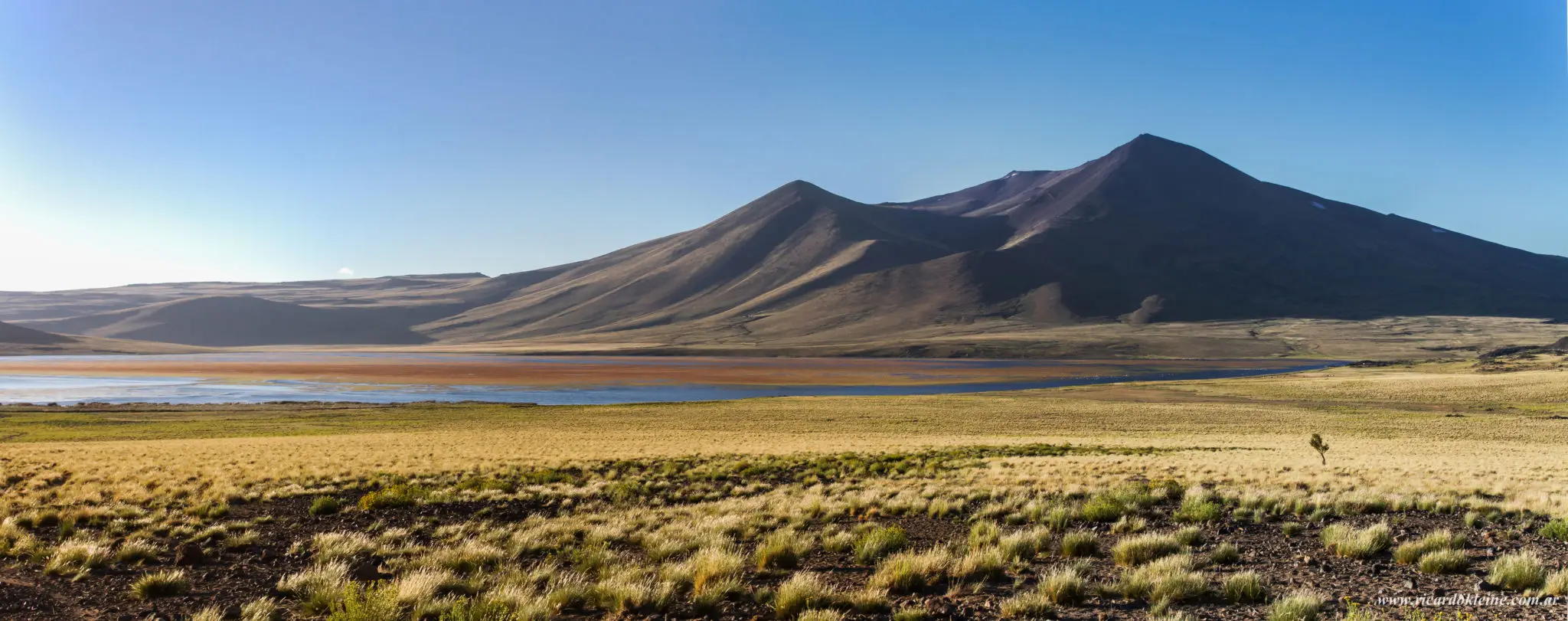
You can come to enjoy a few days of rest or be amazed by the wonders of the entire northern Neuquén corridor.
Emerging destination of the year
In 2025 Huinganco was named Emerging Destination of the Year at the FED Awards. It is also the province’s hiking capital: more than fifteen waymarked trails start from the village, many less than 5 km from the cabins.
What there is to see
-
Ancient forests and the Tree Museum
The afforestation of 3,700 hectares led by Temístocles and Rogelio Figueroa created the country’s first communal forest. The discovery of thousand-year-old cypresses led to Argentina’s first Museum of the Tree and Timber.
-
Cañada Molina Protected Natural Area
A unique forest with cypresses over 1,200 years old, 4.4 km from the village. A 35-minute trail leads to the protected area.
-
La Corona Hill
At 2,990 metres it crowns the village and is its emblem. The ascent is a full-day climb and requires prior registration.
-
Colo Michi Co petroglyphs
An archaeological park with rock carvings over 1,500 years old, set in a volcanic landscape near Butalón Norte.
Transhumance
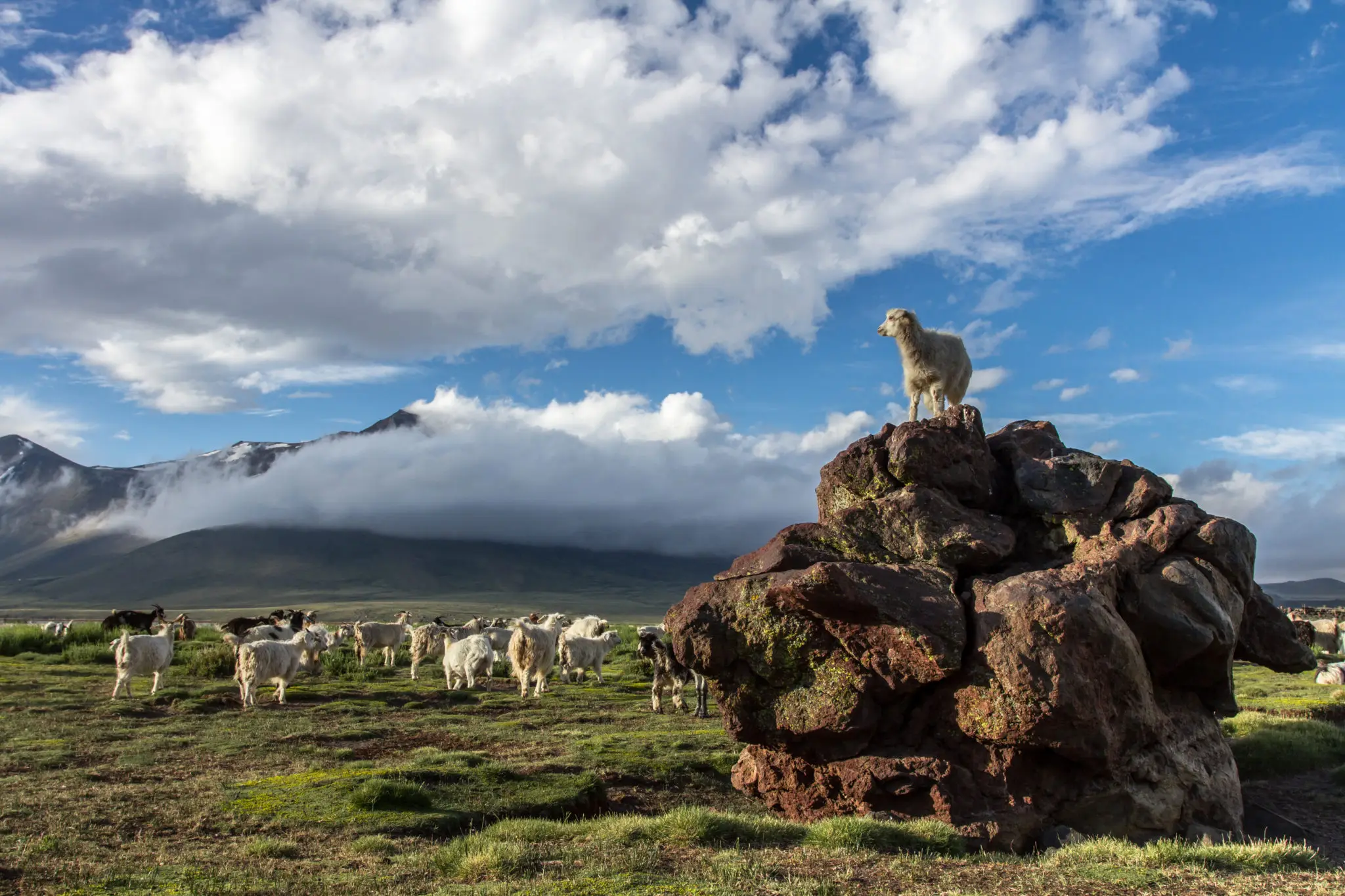
Transhumance is an economic activity that has given rise to a singular and almost unique culture, one that attracts growing interest from people across Argentina and abroad.
Entire families move at two different times of year — the summer and winter pastures — across the fields, paths and roads of northern Neuquén in search of better grazing for their livestock, made up mainly of goats, along with sheep, cattle, donkeys and horses.
The journey between winter and summer pastures usually lasts from one to several days, depending on the distances involved, forcing them to eat, rest and sleep wherever they happen to be, as long as there is some water and grass for their weary animals.
Visit our cabins
Discover the five La Lila cabins and choose the one that best suits your trip.